Press heavier
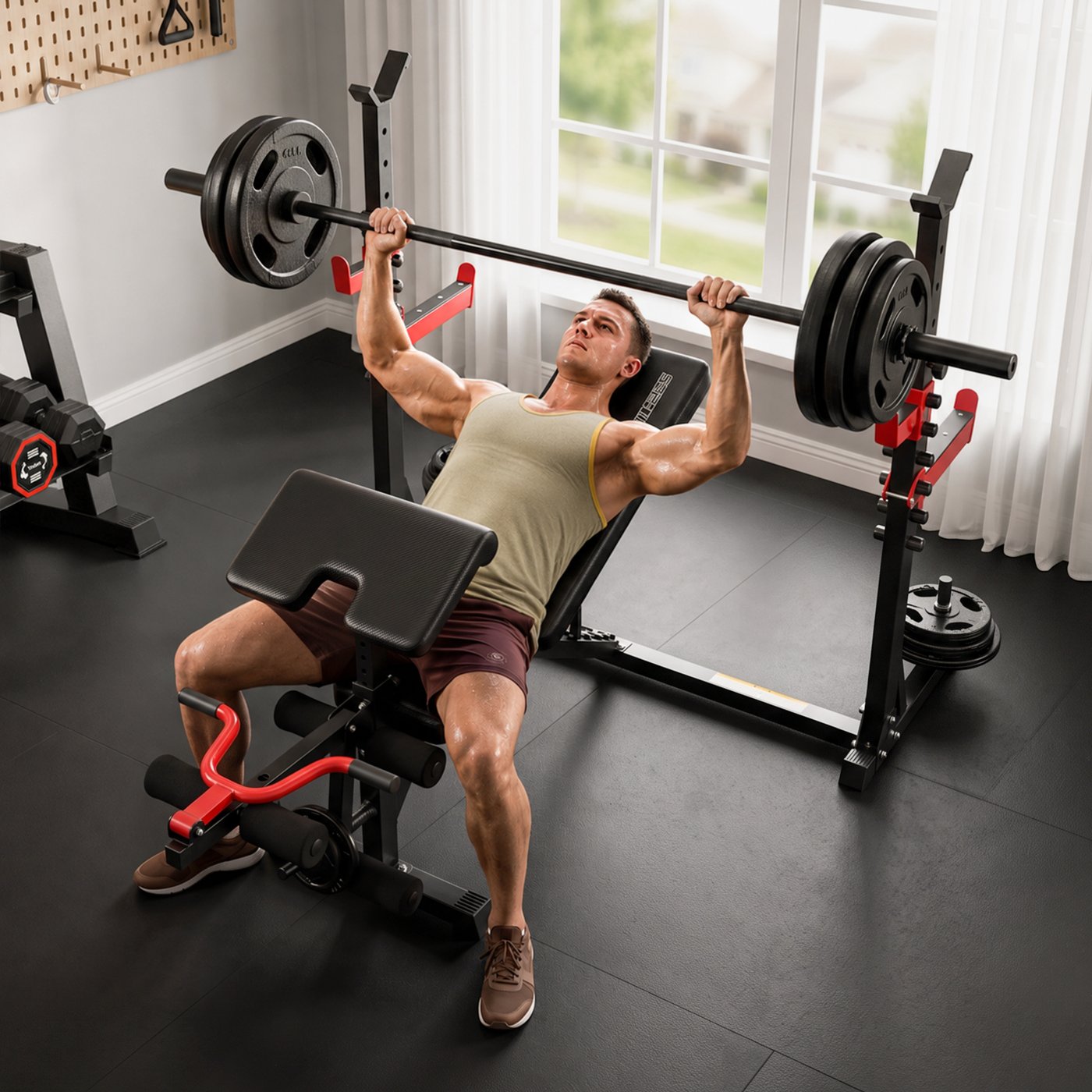
A pad that does not move, uprights at the right width and catches under the bar line. Start with a bench rated well past what you lift, then add the rack when the numbers climb.
Benches →
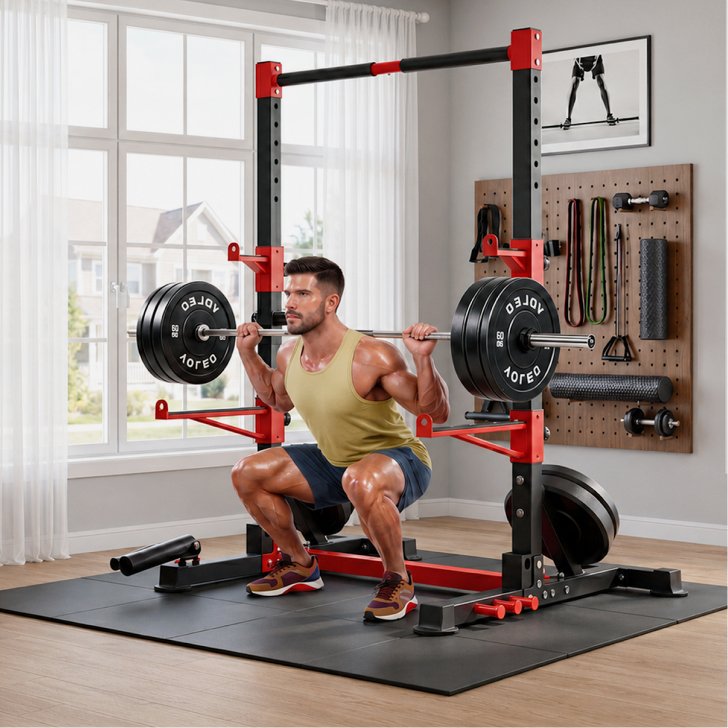
The load path
★★★★★ 5,000,000+ people training on YOLEO frames
Everything we make carries the same job from one end to the other: your hands put load on a bar, the bar puts it into a frame, the frame puts it into your floor. We publish the tested number for every step of that route, then tell you what it folds down to when the session is over.

For twenty years we have built one thing: equipment that holds when the weight gets honest. Not a phase — a frame that is still there in year ten.
Where the load goes
Benches take the press, racks take the bar, dumbbells take the volume, steppers keep the engine running. Storage keeps the floor clear so all of it folds away.
The heavy end
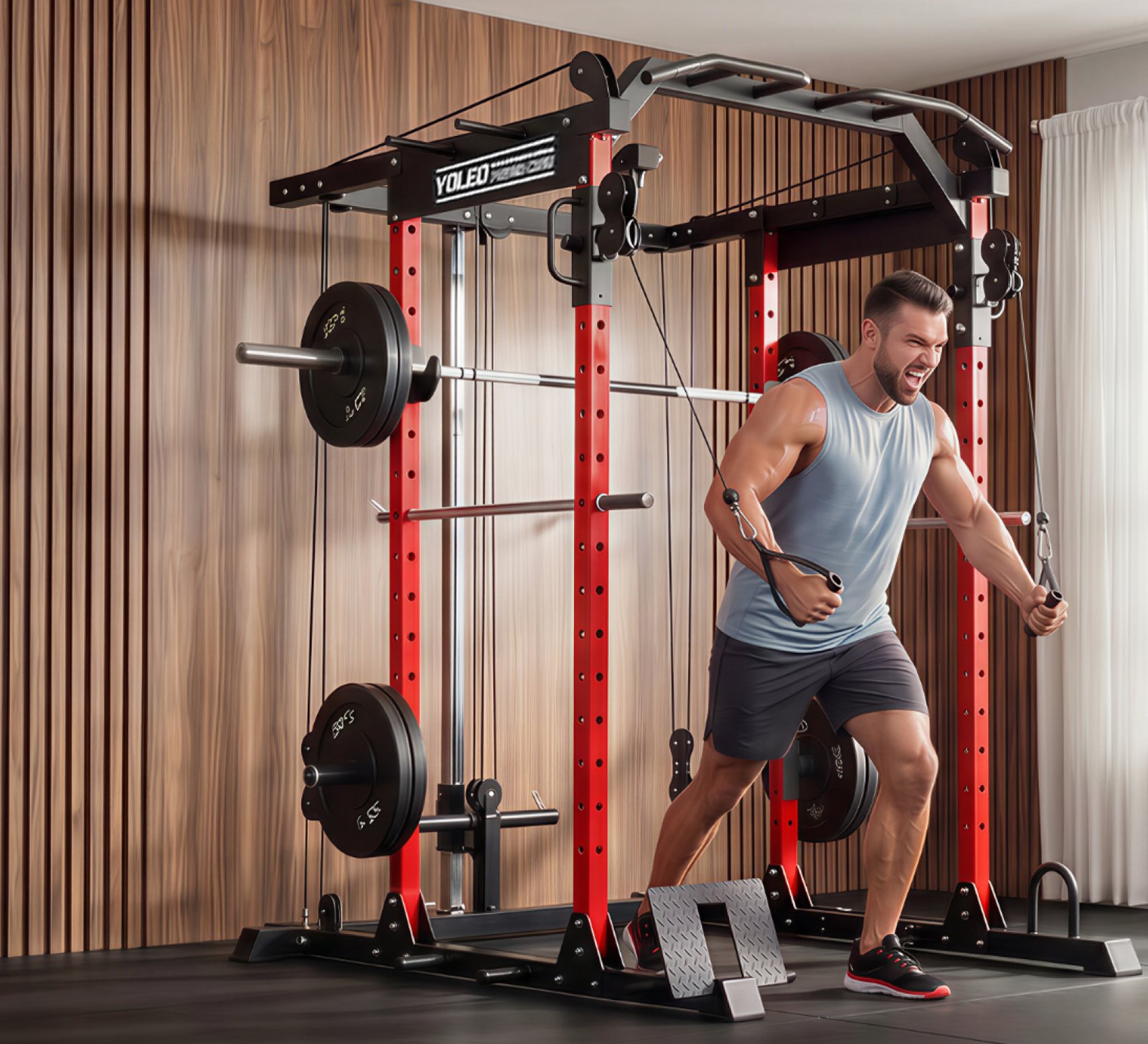
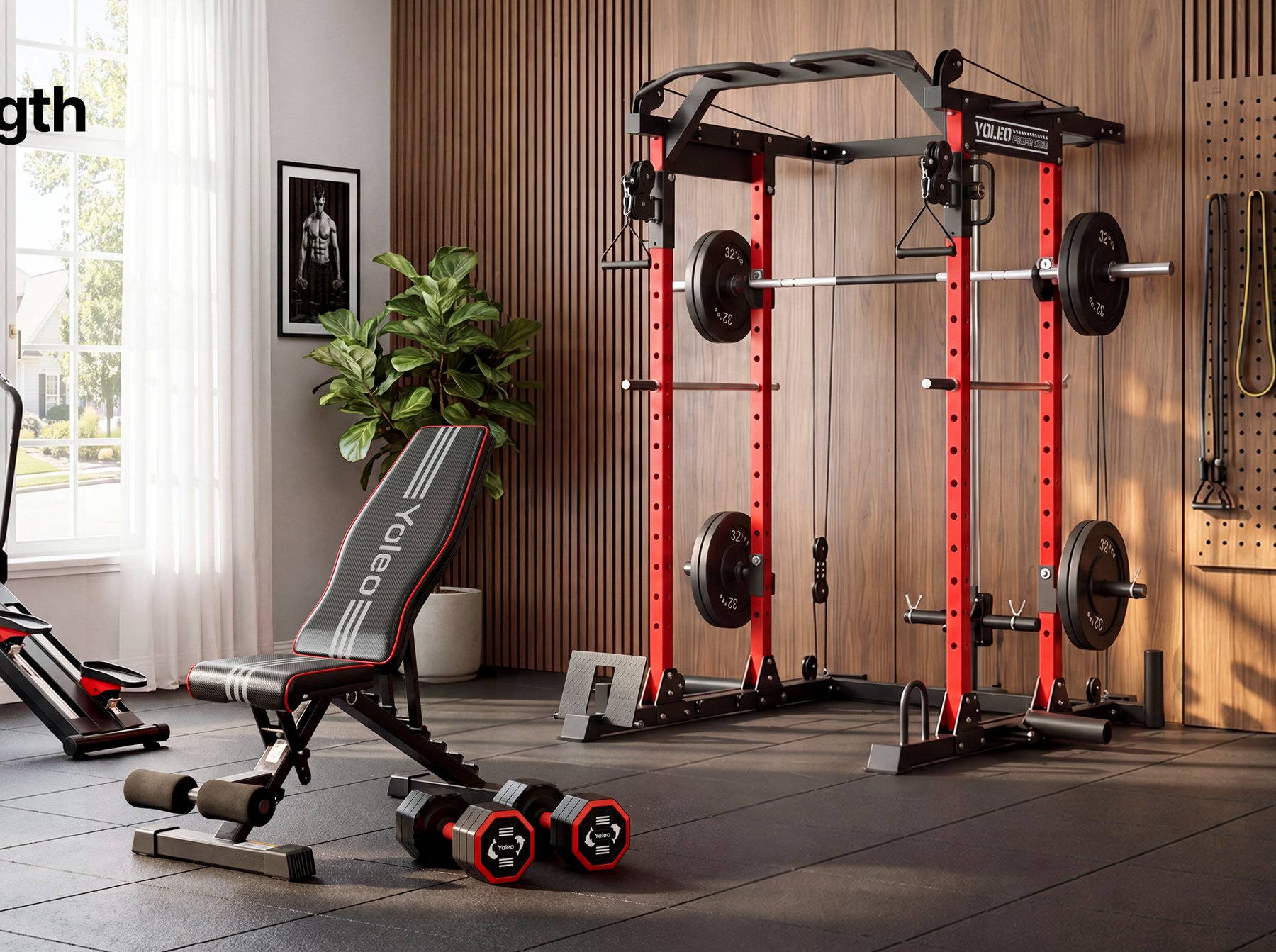
1,700 lb frame, dual 2:1 pulleys, 21 adjustment heights — the whole room in one footprint.
See the spec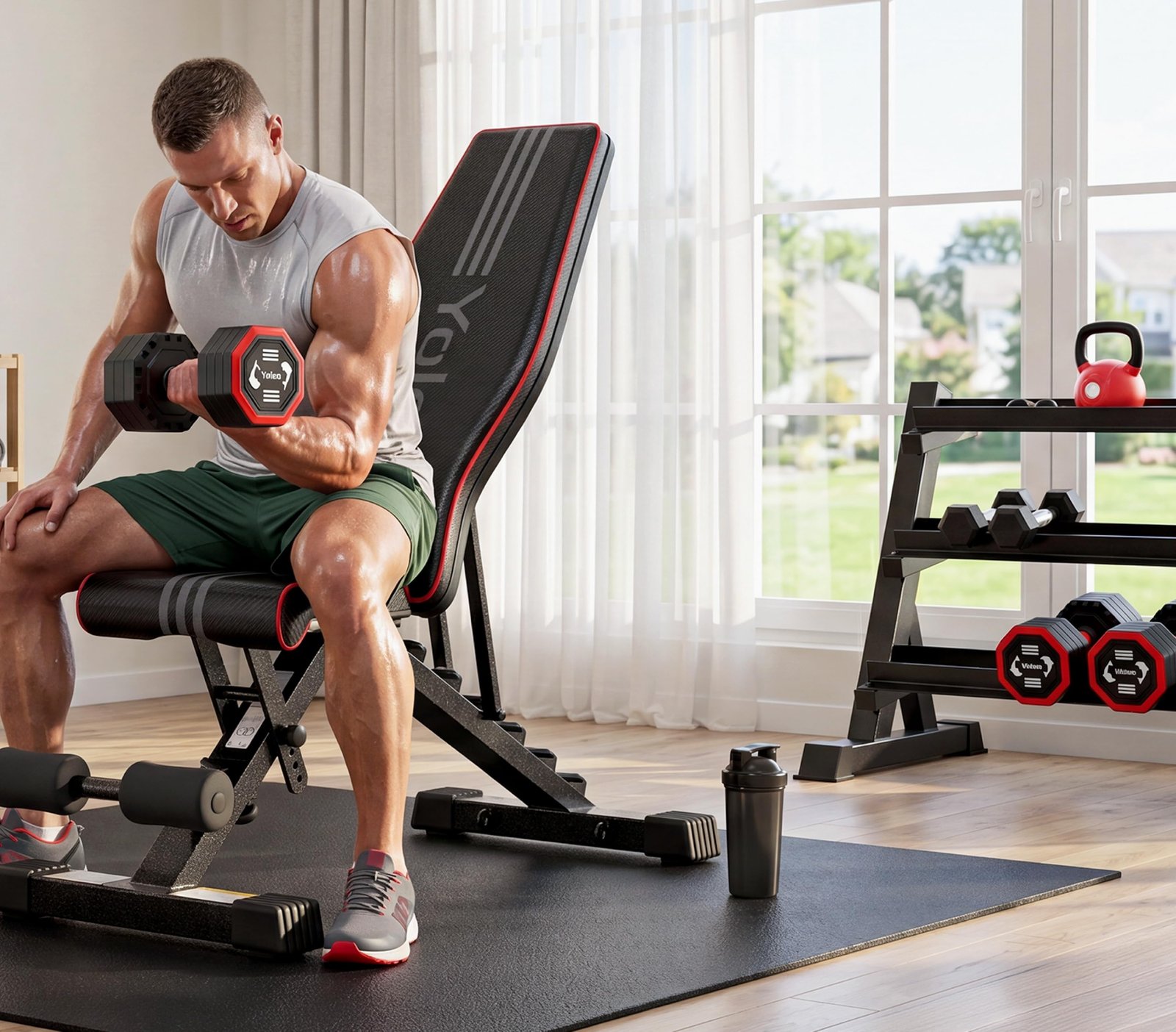
Three posts, 8-gauge steel, competition posture.
See the spec
10, 15, 20 and 25 lb per hand, flat plates for floor work.
See the specPick by what you are chasing
A pad that does not move, uprights at the right width and catches under the bar line. Start with a bench rated well past what you lift, then add the rack when the numbers climb.
Benches →Squats, pull-ups and dips need height and a wide base more than they need attachments. An 83-inch upright with safety arms covers years of training.
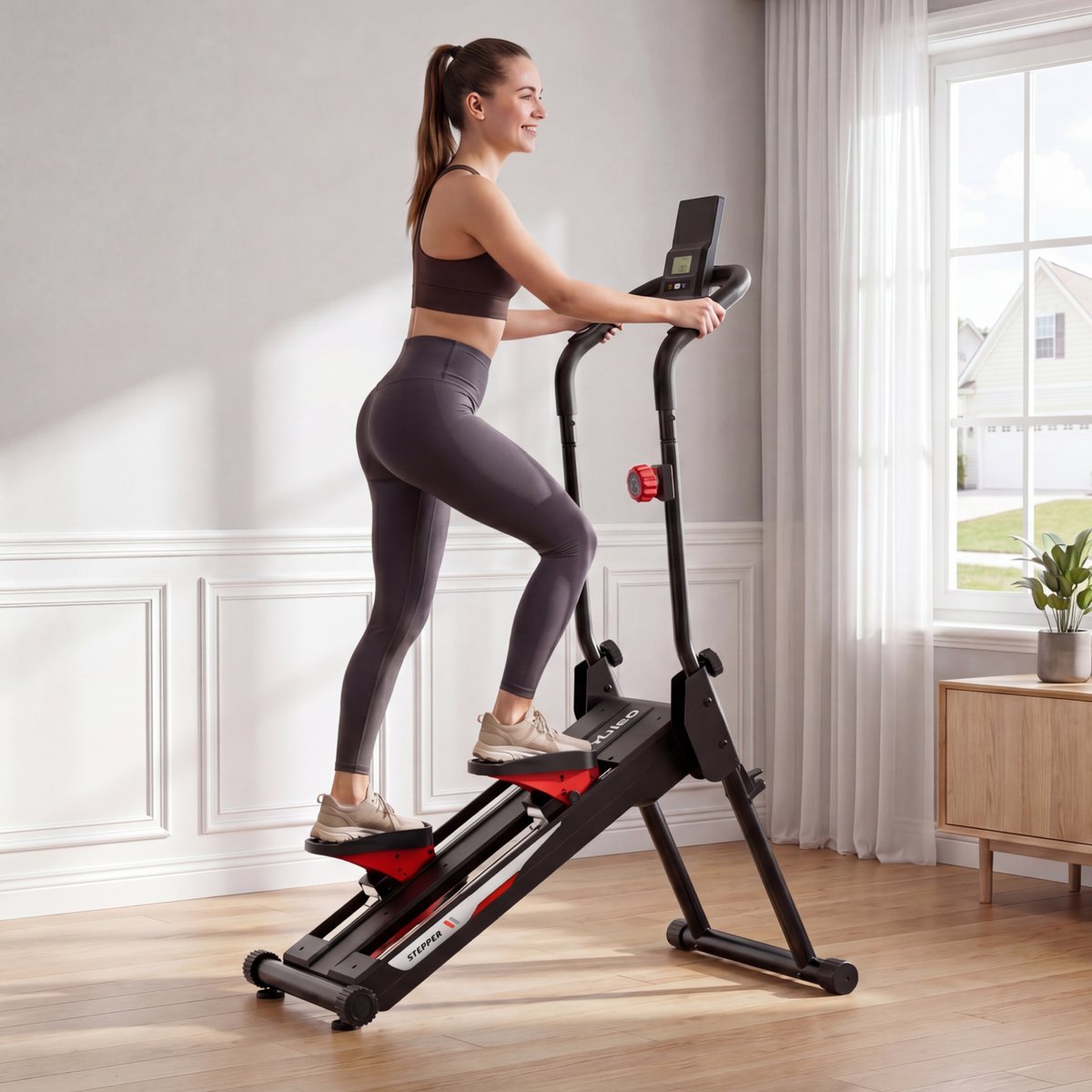
Racks and cages →Low-impact climbing and core work that fits between the bench and the wall. Fold it flat and the room goes back to being a room.
Steppers and core →On the floor now
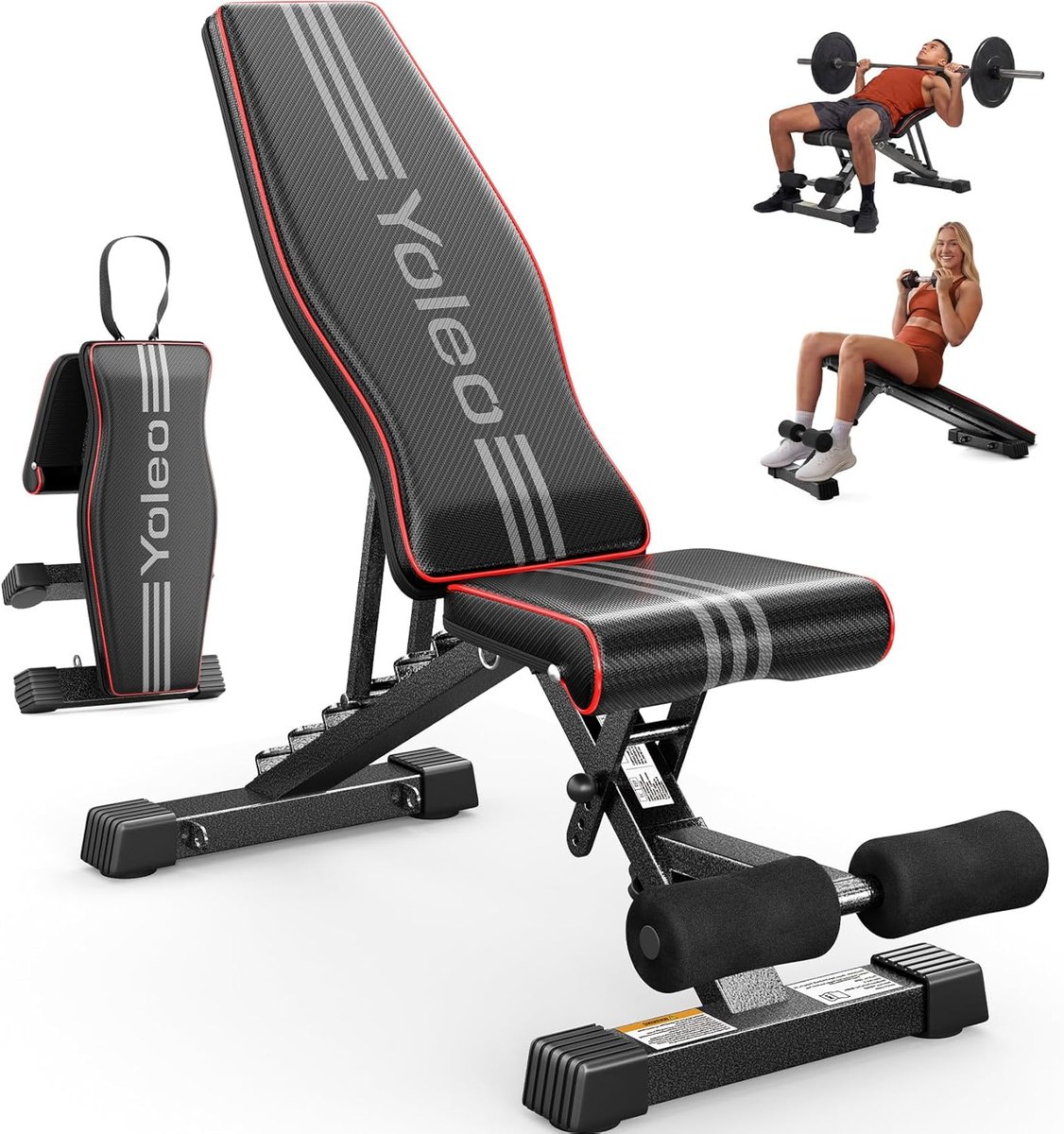
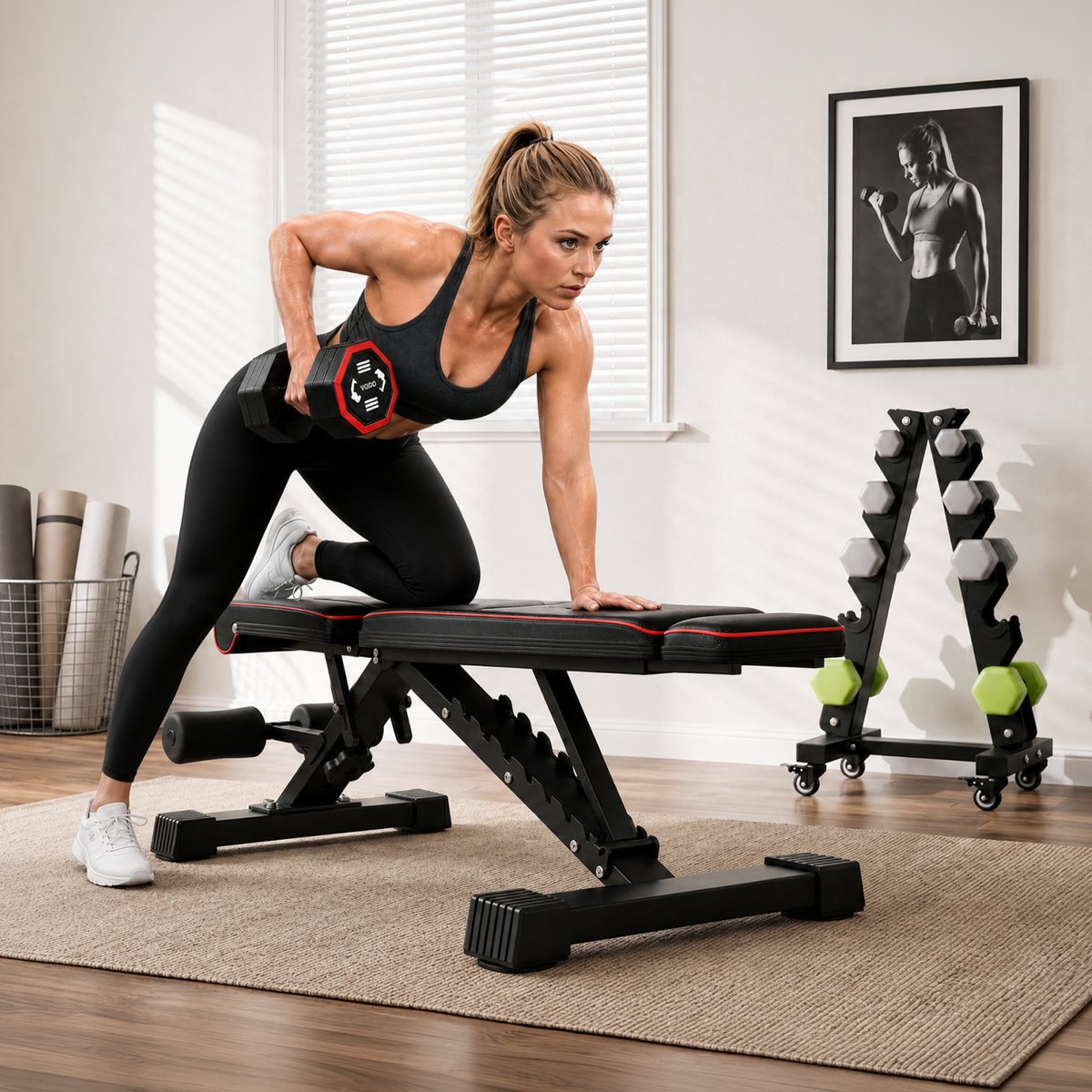
The one that lands ready — first benches, small rooms, dumbbell work.
$75.99last read at the partner store
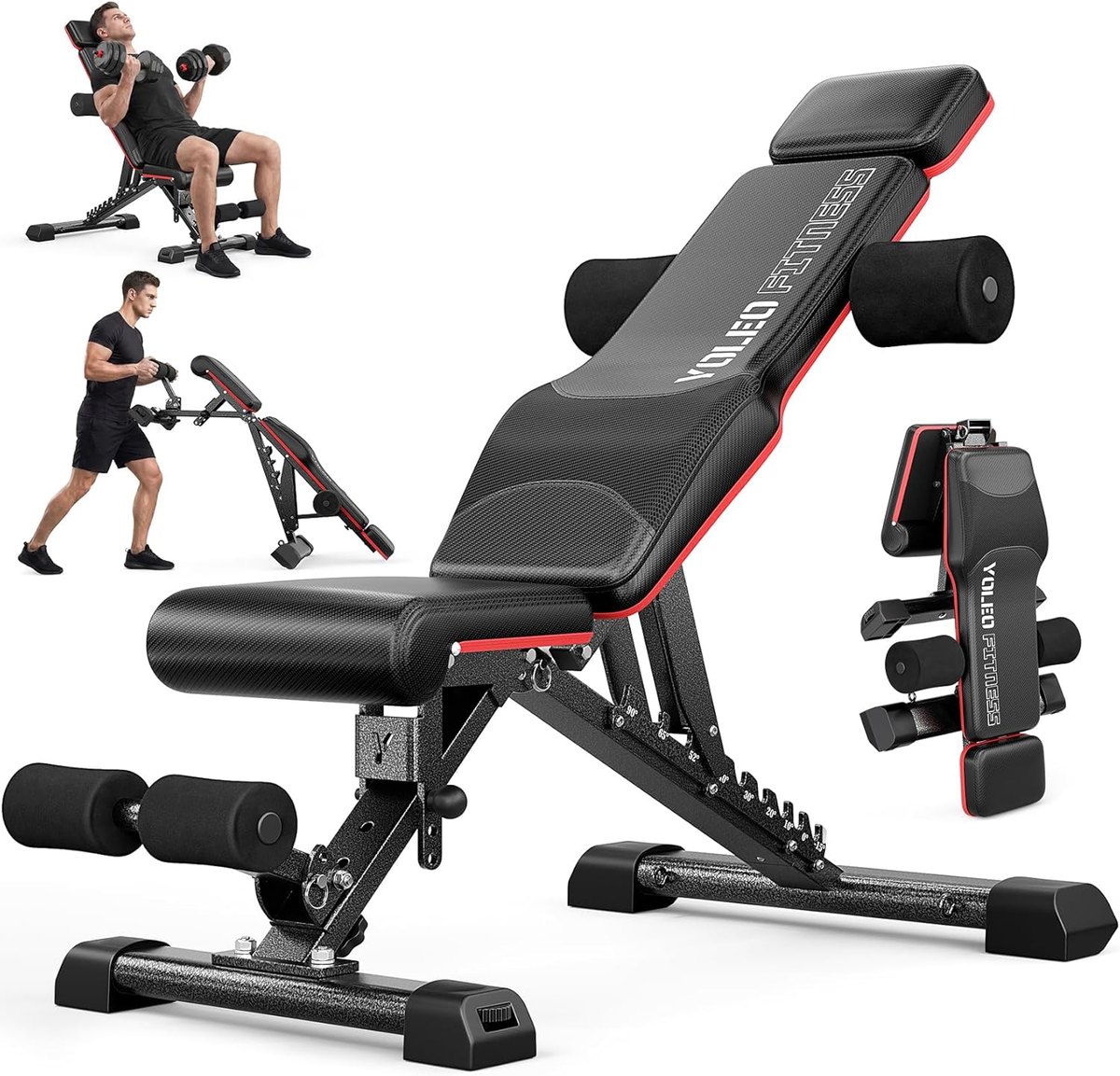
810 ways to set it — press days without a rack, progressive programmes.
$149.99last read at the partner store
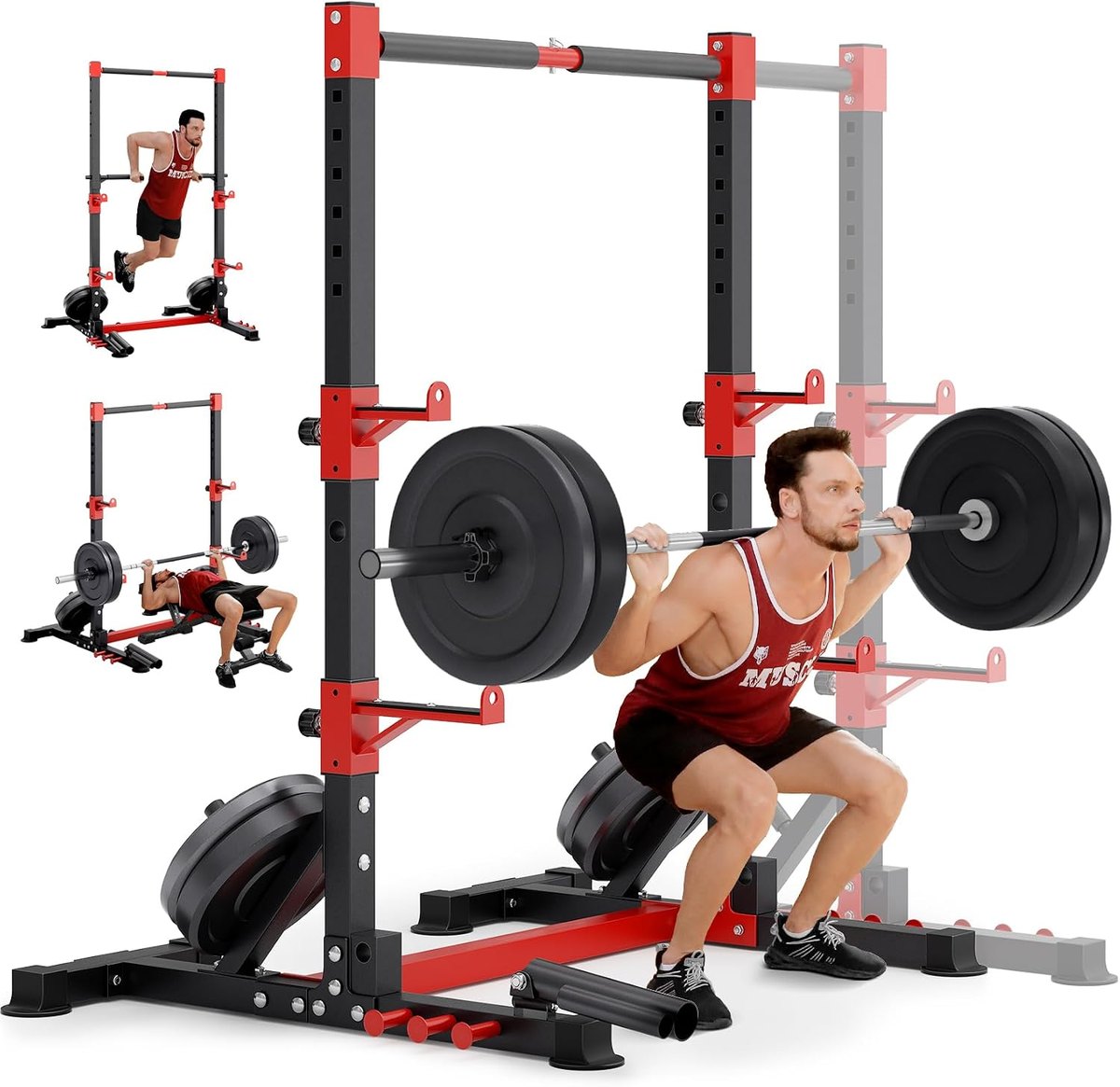
83 inches of upright — squats, pull-ups, free-standing setups.
$169.99last read at the partner store
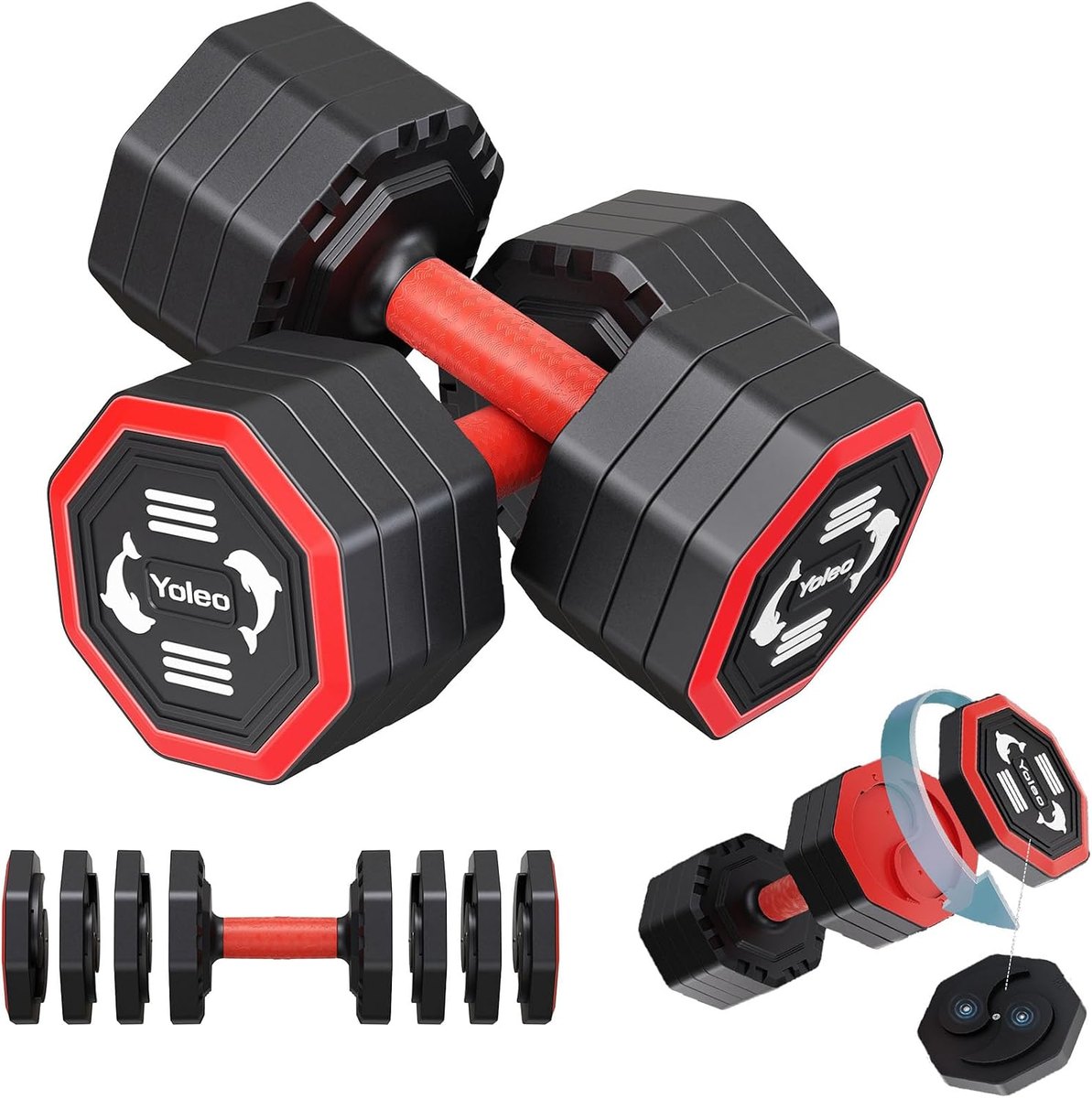
One dial, four weights — drop sets, small rooms, floor work.
$116.99last read at the partner store
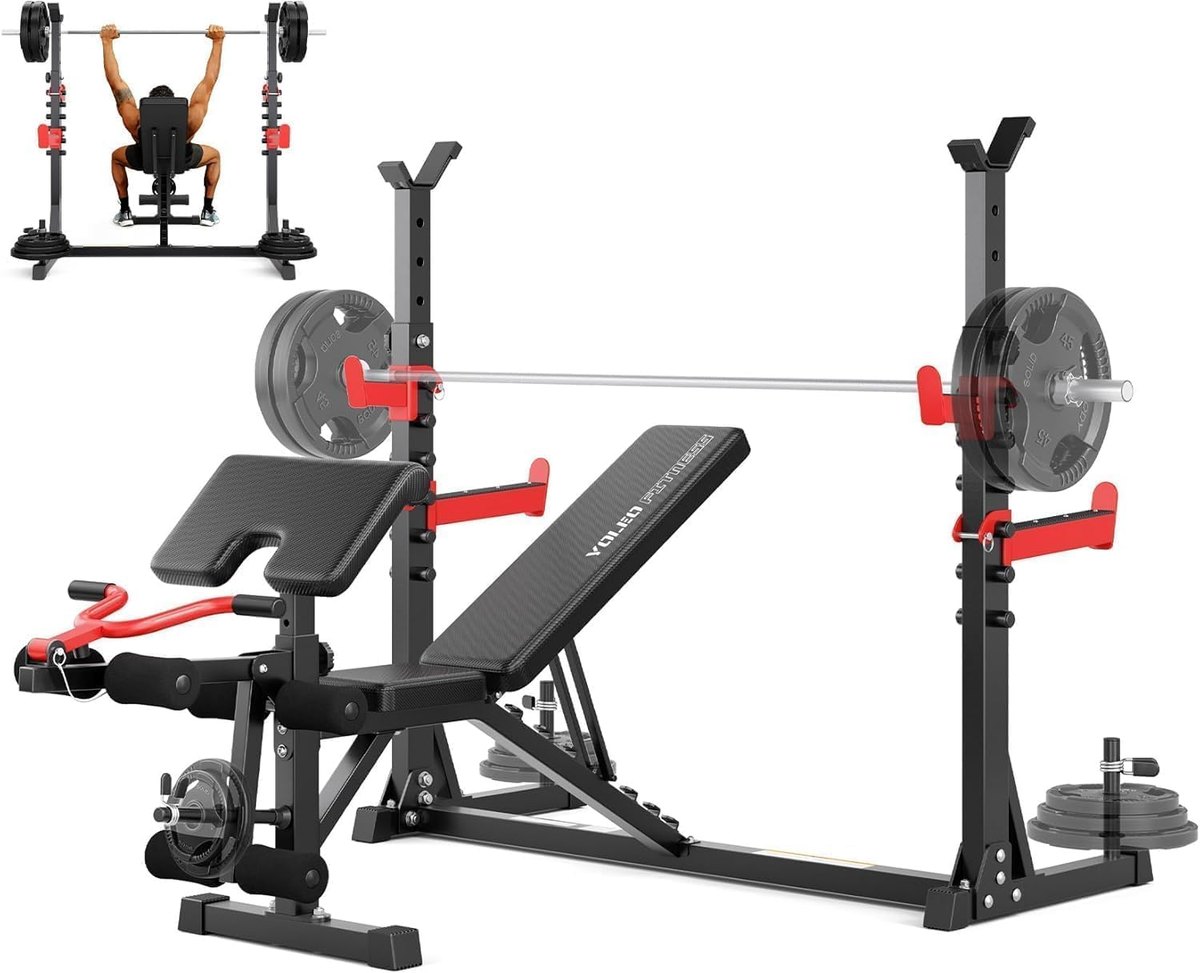
Wide grip, full rack — wide pressing, solo lifters, all-in-one corners.
$229.99last read at the partner store
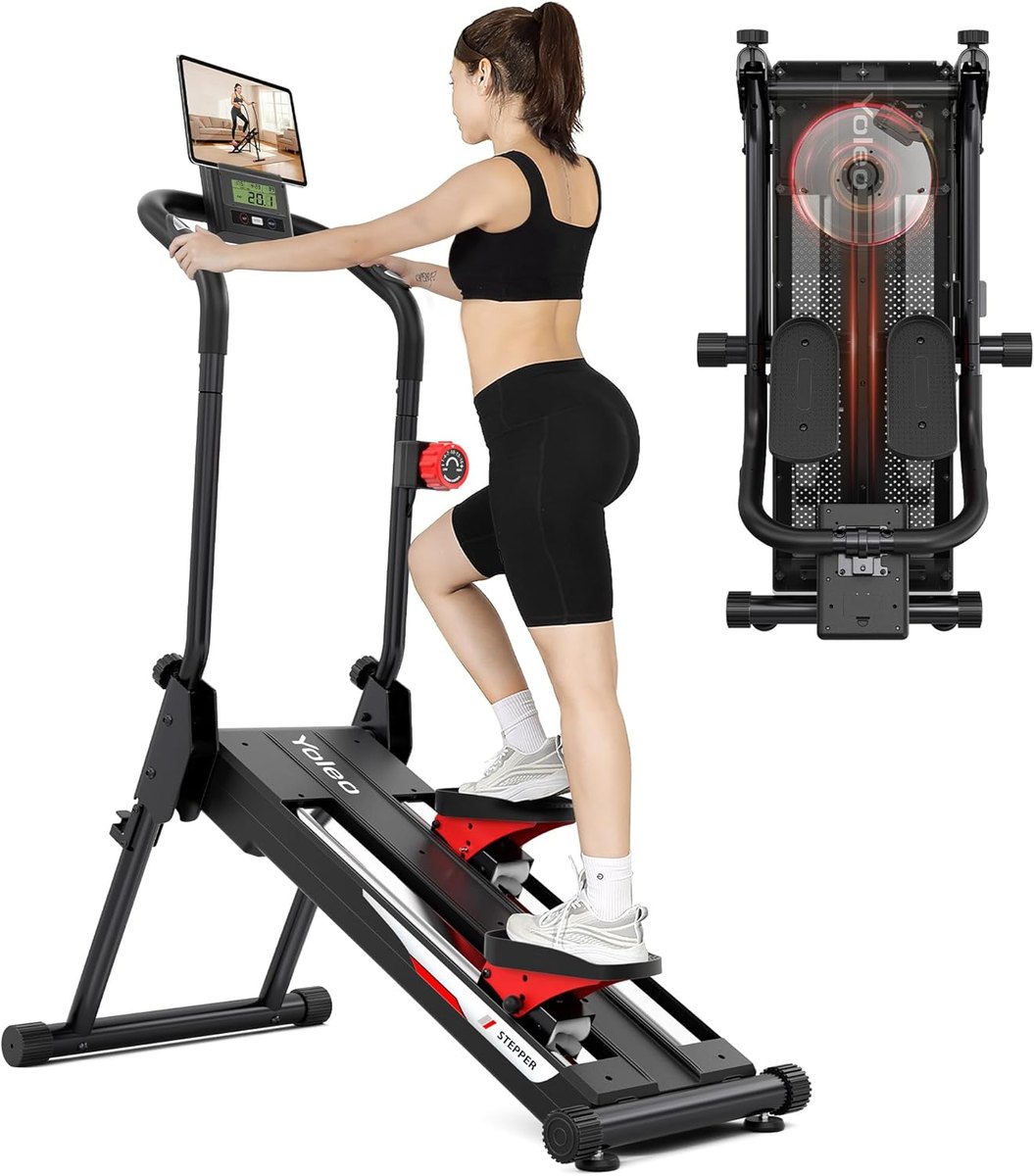
Quiet climbing — upstairs rooms, endurance work, glutes.
$269.99last read at the partner store
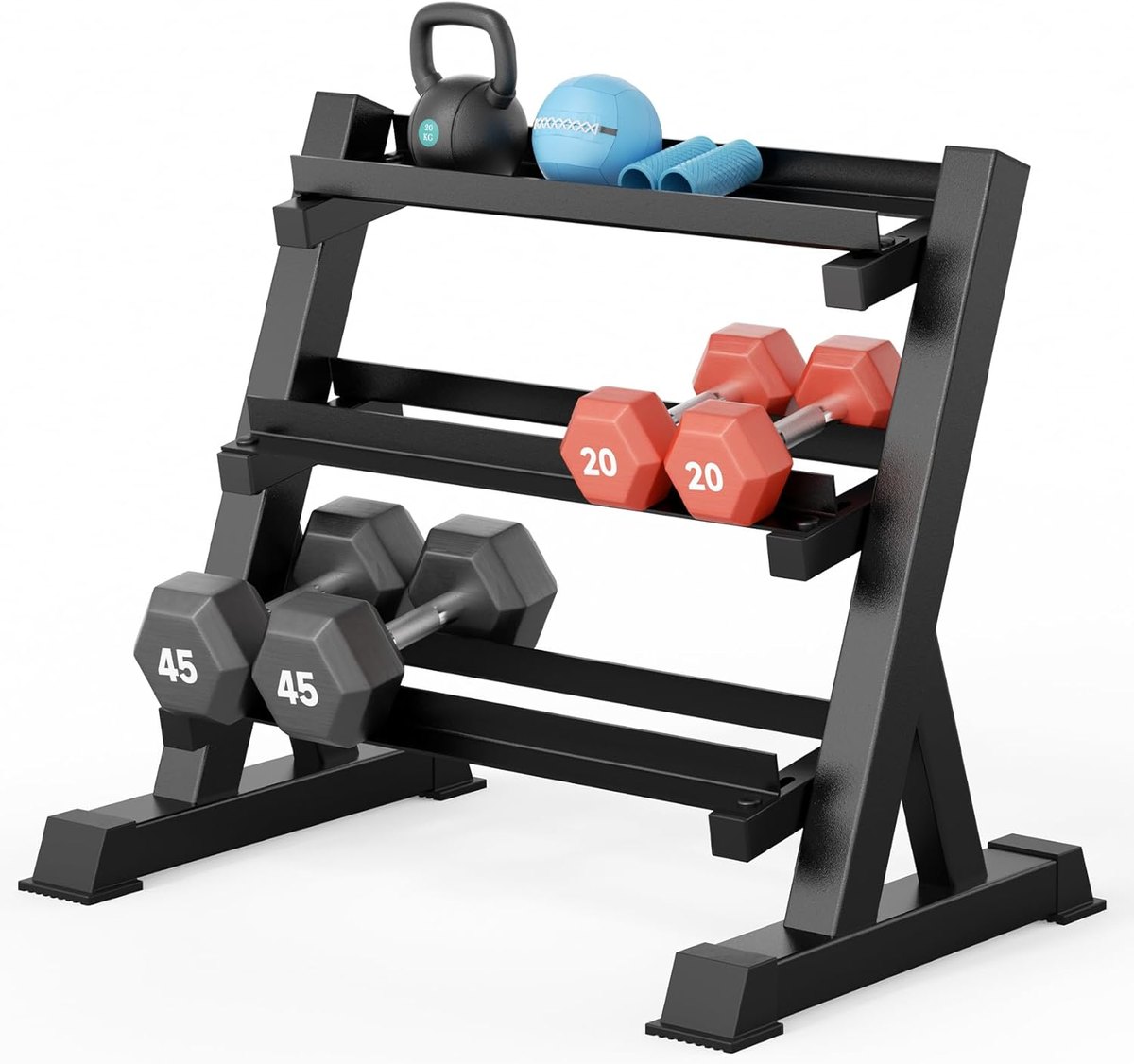
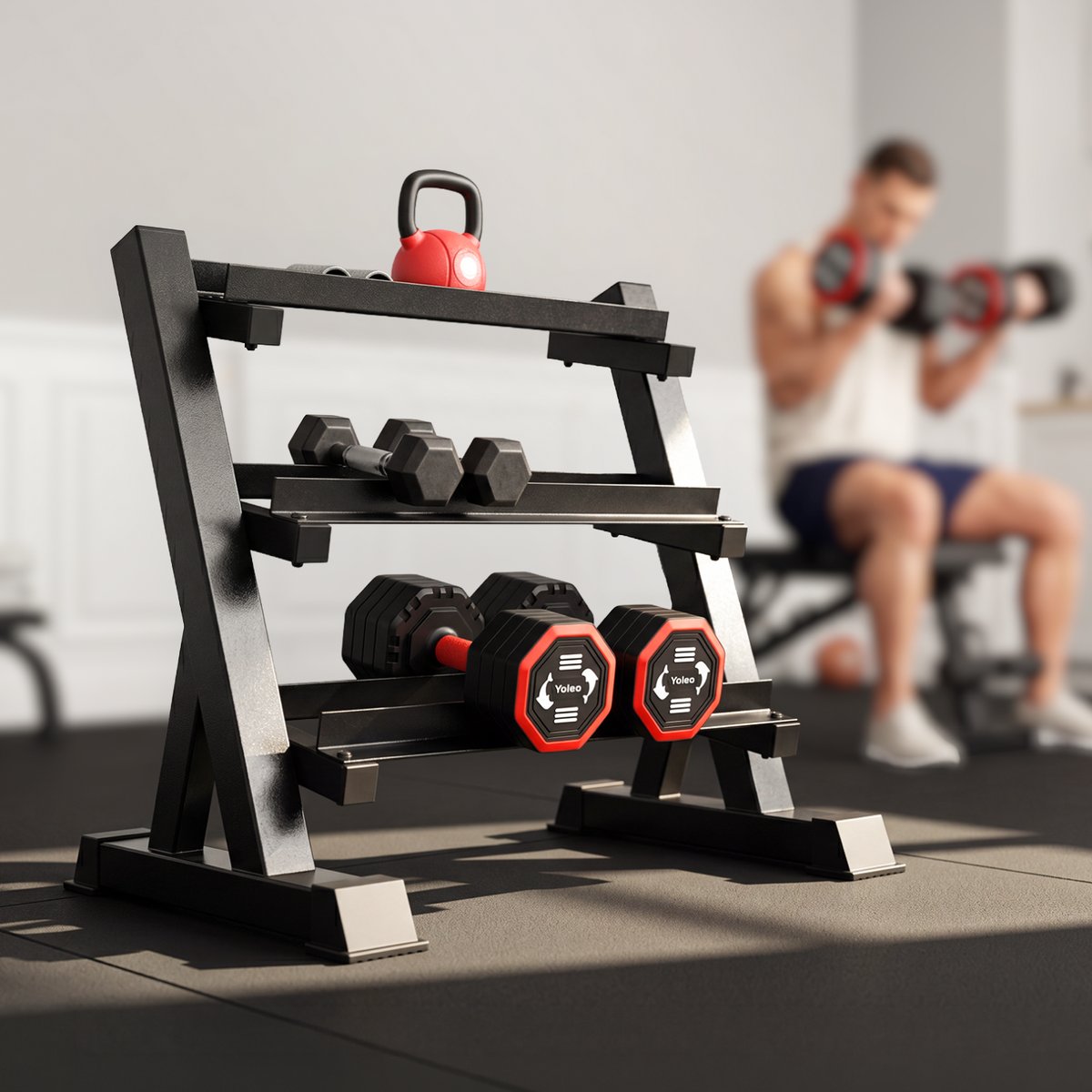
Where the weights live — mixed weight sets, garages, tidy rooms.
$72.99last read at the partner store
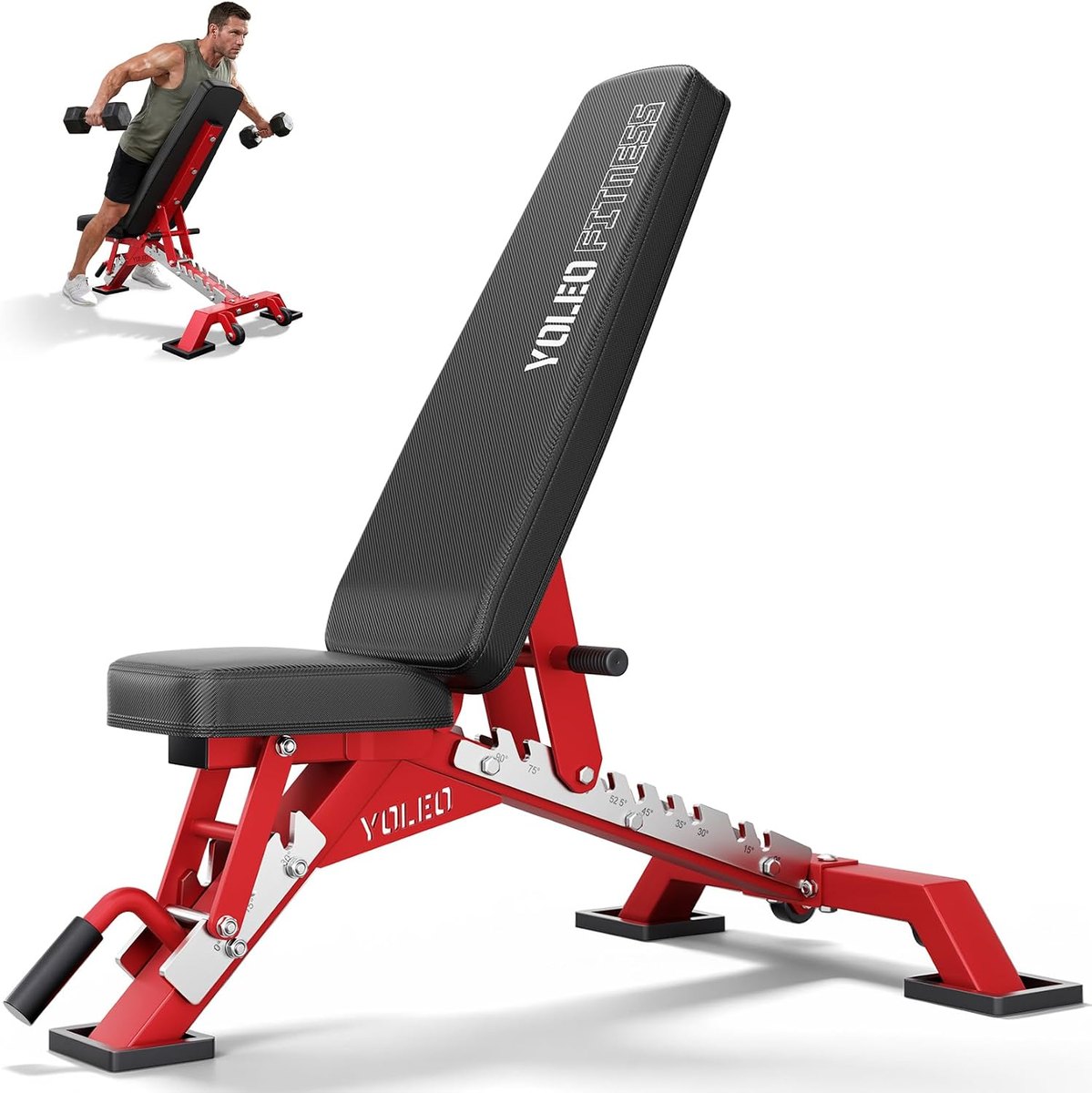
Competition posture — heavy pressing, shared rooms, meet prep.
$199.99last read at the partner store
Read the numbers side by side
| Bench | Tested load | Adjustment | Folded | Price |
|---|---|---|---|---|
| Adjustable 827 lb | 827 lb | 84 positions | 31.5 x 12.6 x 13 in | $75.99 |
| Extended backrest | 827 lb | 90 positions | 31.9 x 17.1 x 8.7 in | $89.99 |
| 880 lb press stand | 880 lb | 270 setups | 36.2 x 20.9 x 9.8 in | $105.99 |
| 1100 lb press stand | 1,100 lb | 810+ setups | 36.2 x 20.9 x 12 in | $149.99 |
| Commercial 3-post | 2,315 lb | 10 angles, -15° to 90° | Rolls on wheels | $199.99 |
From the people underneath them
★★★★★
This is a great bench if you want to start up a workout at home or just continue one it’s lightweight easy to assemble has multiple positions....
★★★★★
Great quality for what it is. Meaning, to not be a half rack, this is a quality work bench. Greatest separation of assembly of all-time. lol…
★★★★☆
Its a great product and as described However the landmine to insert a barbell isn't 2 inch. 2 inch barbell does not fit....
★★★★★
Great product very happy with my order it has arrived very fast and surprisingly very easy to install....
★★★★☆
...But I received a good and great bench. I’m 6’1” and don’t have any problems with it....
★★★★☆
...I would only call this a minor issue, as overall, it is a very nice machine and I would still recommend it....
★★★★☆
My husband loves it! He says it was very easy to put together and very sturdy. Good Material. He feels safe when doing his exercises....
★★★★★
It's a great piece of equipment, I assembled by myself the instructions are clear and it took me about 4 hrs assembled the machine and about 30...
Chalk notes
Two benches can both say 800 lb and mean different things. Here is how to read the number, and which one to compare when you are choosing.
Read the noteFour measurements decide whether a rack fits, and only one of them is the rack's own height. Take them before the delivery, not after.
Read the noteAdjustable benches sell on the number of positions. What matters is knowing which four or five you will actually use, and being able to find them again next week.
Read the noteThe long read
Six things decide whether a room full of steel turns into training or into an expensive clothes rail. We build to them in this order, so it is the order worth shopping in.
The number on the box is a test result, taken static, with the pad at its strongest angle. It is there to give you headroom. Our entry bench is ASTM-certified at 827 lb with a 330 lb user rating; the press-stand model tests at 1,100 lb; the three-post commercial bench at 2,315 lb on 8-gauge steel. A lifter pressing two plates is asking roughly a quarter of that first number — which is exactly the margin an uneven rep eats into.
On multi-station frames the figure is a sum, not a single load. The 1,980 lb Olympic set is 880 lb of bench plus 660 lb of rack plus 440 lb of leg frame. Compare the station you will load hardest, never the headline.
Angles that are printed on the frame beat a vague count of positions: when a programme says 30 degrees, you want to find 30 degrees again next Tuesday. Our benches run 9 to 10 back settings from -30° through flat to a locked 90° vertical, and the seat pins underneath the back pad so you stop sliding forward on incline work.
Length matters as much as angle. A 28-inch backrest supports most lifters; past six feet you want the 32-inch commercial pad or the three-stage extending headrest that takes users to seven feet. Width is the quiet one — 13 inches under the shoulder blades is the difference between pressing and balancing.
Home equipment fails at the moment it stops folding. The 827 lb bench collapses to 31.5 by 12.6 by 13 inches and weighs 23 lb, so it goes under a bed with one hand. The stepper folds to 1.6 square feet — roughly a dining chair — and the Olympic bench folds with the plates still stored on the frame.
Racks work the other way round. A squat stand earns its stability from base width, not height: 54.7 by 43.7 inches with six reinforcement plates holds the tipping moment without a single anchor bolt in your concrete.
One adjustable pair replaces four or five fixed pairs and changes load on a dial between sets. Look for a lock you can feel engage, a handle that grips when your hands are wet, and plate shape: rhombus plates lie flat for push-ups and renegade rows where round ones roll into the skirting board.
Then give them a home. A three-tier rack with bar spacing adjustable from 2 to 6 inches takes hex heads, adjustable pairs, kettlebells and plates on one frame — heaviest on the bottom tier, bands and straps on the top tray, floor clear for the bench.
Most complaints about training at home are really complaints about the downstairs neighbour. Air-cushioned plates take the ring out of a set-down, magnetic resistance on a stepper removes the friction pad entirely, and 6 mm of high-density mat spreads the point load from four rubber feet across the boards.
It is the cheapest section of the whole load path and it protects everything above it — hardwood, tile, and the frame's own levelling feet.
We specify how a thing goes together at the same time as the steel. The entry bench ships 98% built and needs two pins and five seconds. The commercial bench is 90% built, six steps, about twenty minutes. The 6-in-1 press set is tool-free and takes roughly a minute; the nine-station cage is the one job in the catalogue we would not start alone — two hours, two or three people.
Whatever you are building: lay the parts out, leave every bolt finger-tight until the frame is square, then torque it down. Doing that in the other order is the single most common cause of a rack that rocks.
Straight answers
Less than most people expect. A folding bench plus a dumbbell rack fits in about 15 square feet of usable floor. A squat rack with a bench inside it wants roughly 6 by 6 feet of clear space plus room to walk out with the bar — and a ceiling high enough for a pull-up.
It is the load the frame was tested to hold, not the weight you are expected to lift. Read it alongside the max user weight: an 827 lb bench with a 330 lb user rating is designed for your bodyweight plus the bar, with a margin on top.
For flat pressing, no — the uprights on the press-stand benches hold the bar. For squats, overhead work or anything you want catches under, a proper upright is the safer answer.
In a small room, yes. One pair covers four or five weights, changes in seconds and stores in the space a single fixed pair would take. Fixed hex dumbbells still win on durability if you have the wall for them.
The frame is rarely the noisy part — the floor is. Air-cushioned plates, a dense mat and magnetic rather than friction resistance on cardio equipment take most of the sound out of a session in a flat.
Pick the frame that carries your load today, and leave room for the number you are chasing next year.